- David Kaminski, DV Film Instructor, New York
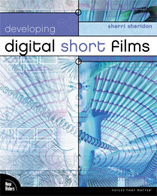
"This is a step-by-step guide to craft an award winning film without going bankrupt. Full of insider knowledge, this offering is a must for aspiring directors. A real one of a kind book that should fill the gap and empower you in the process. And you too will be able to shout from the top of your lungs: "Action!"
- The [Digital][Dispatch] Mag
"San Francisco filmmaker/digital flick queen Sherri Sheridan shows the reader how to turn literary ideas, metaphors, or philosophies into movies that can captivate their viewers. In Part 1, she gives prescriptions for movie making. She lists 40 plot points for feature films from the hook that moves the viewer from the real world to the film world, foreshadowing to prepare for the resolution, twists of plot, revelation and epiphany, and resolution. Much of this is in Shakespeare and, for that matter, in Sophocles. Still, Ms. Sheridan takes inspiration in baby steps for her readers. And she does it very well.
Part 2 of the book is about turning scripts into visions. Part 3, the techno stuff, is about doing vision in digital formats with computer-enhanced animation and special effects, applications of 3D, and much more. One book isn't enough make the next Steven Spielberg, but this one is a fine start. Ms. Sheridan writes with experience and with an evident desire to help her reader. Developing Digital Short Films is an awfully good way to learn how to do it."
- Andrew Allentuck, Globe Technology
"This is an excellent resource for teachers covering everything you could possibly know about making short films!"
– BC Media Educators Website Review
"This book has all sorts of useful information on how to make a film. I'm doing a documentary right now and am using several ideas straight from the project exercises in this book. I never realized there were so many different ways to communicate with an audience. Most people seem to overlook the planning stages of filmmaking because they do not know where to begin. I have been following along with the exercises in this book and have gathered enough ideas for making 10 films! The drawings are suppose to be rough as the author explains, since they are just ideas at this stage. Great book for students or people making films who need help thinking up original ideas. I'm getting a lot out of this book and would recommend it to anyone thinking about making a film! It will save you lots of money too!"
- Steven Greene, Atlanta, GA
"A friend told me to get this book when I told him I was having problems nailing my film idea down. The section called "40 Plot Points For Feature Films" saved my deadline on script. I was able to use many of the classic narrative techniques listed in this book to construct a much tighter story visually. Great book for anyone who has an idea for a film but does not quite know how to present it shot by shot. Lots of valuable information on how to get the audience involved in your film emotionally. I'm using Final Cut to edit my film and found the digital storytelling sections useful for how to give my film an original look, that was fast and did not cost a bunch of cash. Highly recommended!"
- Randy Carlson, New York, NY
"This book focuses on the most important aspects of filmmaking...character and story development... Without a strong original story and characters nobody will care about your particle system and fancy renders... I like this quote by Syd Mead "And finally, don't assume that technique alone will save your ass. It still is the idea that wins...every time. Remember that elaborate technique and dumb story produces a demo reel, not a narrative."
Sherri Sheridan takes apart the traditional narrative structure of successful films and allows you to put them back together again using your original characters and plotlines. There is a ton of material on scriptwriting and storyboarding, preproduction is the most important phase of making a film and this book is filled with preproduction information. This is must have material! If you are planning to make your own short or feature film buy this book! Trust me you won't be sorry! I could go on and on but I have to work on my film! Good luck!"
- M Dot Strange, San Jose, CA
"This book has proved invaluable to me as the coordinator of a first year undergraduate course designed to introduce media students to film and video, as well as multimedia skills. Sherri's informal style of writing, coupled with her unpretentious approach to sharing her own experiences as a digital film maker, makes this an ideal text for first year students. This book captures the spirit of the convergence between traditional film and multimedia, and the countless examples and case studies presented throughout the book are a great source of inspiration for students.
While many of the concepts addressed in the book are not new and have been adequately addressed in other texts, Sherri describes these concepts in a way that is highly engaging, and the comic book style illustrations appeal to a young audience (as well as those of us who are not so young). Of particular note are the chapters that deal with "generating new ideas" (something first year media students find difficult), "creating original characters, themes, and visual metaphors" and "developing plot points", as well as the final three chapters of the book that deal more specifically with the convergence between film and video and multimedia.
Two of my lectures this semester were based on Sherri's analysis of several popular movies, and the sections of those lectures that focused on themes and also on the use of color palettes in popular movies were real winners! Moreover, Sherri was more than willing to communicate via email and made several resources available to me as a teacher to address particular student needs.
When you purchase this book you are investing in a treasure trove of teaching tips, techniques and resources. Sherri's Website adds to the richness of these resources, and her commitment to inspiring and motivating budding film makers is evident in this book and Sherri's willingness to go the extra mile to further such educational ideals.
Thanks Sherri for providing educators with such a powerful set of teaching tools at a time when we are challenged to meet the demands of a student population who need to be conversant with both traditional and digital film making techniques. "
- Dr. Denise Wood, University of South Australia
" I am Praveen Chrispugg, studying animation and filmmaking in the UK. I bought this book recently. It is an excellent book and leads me to many original avenues in the filmmaking process. Every page in this book is precious for those who want to learn filmmaking and preproduction. It has a step-by-step filmmaking process along with exercises and encouraging quotes related to subjects, which allow you to think in different perspectives. My MA project is now based on this book. This one book is enough for one to learn filmmaking. This has been prepared by a professional in film industry. The author took nearly three years to complete this book. She put all of her experience and experiments into this book. "Developing Digital Short Films" takes readers to a professional level from an amateur one. I am highly recommending this book to all filmmaking students and animators. Once you start reading it, you won't stop.This is THE book we have all been waiting for!"
- Praveen Chrispugg, London, UK
"This book has more ideas on ways to make a film than any book I have ever seen! The project exercises really help keep the preproduction process on track. Great for taking a rough idea and turning it into a film you are proud to show. Reading this book for me, was the difference between making a bad first film and making a deep work of art. If you are making any film, you need this book!"
- Shooter, Austin, Texas
"I have seen no other book with this type of information combined. It helps with most aspects of pre-production in a thorough manner. I would definitely recommend this book. "
- D. Meltzer, Downers Grove, IL
"New bible for filmmakers everywhere! If you are making any kind of film, or telling any sort of story, the information in this book will make it better and deeper. There is a ton of information on how to tell a VISUAL STORY, which none of the other film books I've read cover in so much depth. The sections on how to use visual metaphors and symbols really helped me to understand how films tell stories using pictures and actions. I've never seen a book with so much useful information packed onto each page. There are 100's of lists of ideas for the reader to choose from in a great step-by-step preproduction process. The digital parts on storytelling are revolutionary and really helped me see where I could use some simple techniques to make my film more hip and original. Essential reading for any independent filmmaker working in features, documentary or shorts. I just love this book! Buy it - it will change the way you think about making films on a micro budget."
- A Reader From Amazon.com
"Bloody Marvelous Book! I was browsing the movie section at the bookstore two months ago and I came across your book... I began to read bits of the book and within a matter of minutes had walked to the counter and purchased the book. What a find you and your book are!
I have been a director for 10 years, from music videos through commercials to films. I shot my first hour long TV pilot last year as a gun for hire and the experience woke me up to the importance of telling my own stories. And I've just finished my first "digital short film" two months after picking up the book. I'd already written the script when I got the book, but I rewrote it subsequent to reading the book, especially the development chapters, which are my favorite.
Anyway. Long story cut short. Just a mail to tell you that it's a very special book. I'm recommending it to everybody, especially the people who think they know everything. I love the richness and dense layers of information. I marvel at what I get out of it. I wonder what a beginner gets out of it. Did I say thank you? I'll send you a link when my movie goes online."
- L. Roderick, South Africa
"I'm hoping to spend more time being creative - and less time being frozen. I just picked up a fantastic book called "Developing Digital Short Films". It's been a great read so far - and in some ways has made me feel like I'm back in film school."
- Vash, From An Evil_Blender Post
"A Developing Digital Short Film Success Story! In a previous post I recommended the book "Developing Digital Short Films" to help you develop ideas for films. One of the reasons for there not having been a post for the past few days is that I have been working through this book myself. I can report that the exercises really do work - I now have two ideas for my first short film, and that's from only the first 50 pages !
I am looking forward to taking both of these ideas through into the next stage of development and will keep you all posted on my progress. I cannot stress how impressed I am with this - I have dithered and been unsure of how to come up with anything other than a multi-million dollar epic myself for years, and yet in a few days this book has brought me a couple of ideas that are more practical for an indie filmmaker with next to no budget."
- Nigel Davies
"With some wonderful and affordable toys available to the Digital generation there has never been a better time to make your own short film. Now a lot of expense and time has been shed by using digital cameras and good software with a high spec PC. This book is aimed at those who want to take that step.There are three main sections divided into eleven chapters and they take you through the entire process. Section one is about the building blocks such as plot, theme, brainstorming and even pitching the idea. You then develop the characters, look for themes and work out all the plot points before a script is even mentioned. The second section is very much about visualising the script with the organisational structure, storyboarding, composition of shots as well as set, lighting and sound considerations.Section three is about production styles, and that means effects, bluescreen, animation and anything that defines the visual style.
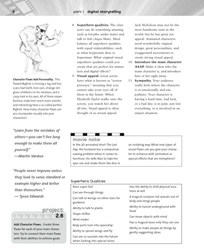
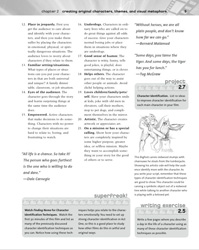
Throughout there are mini clapperboards that give definitions of terms used and there are also highlighted creative tips. Every page is chock a block with line drawings, graphs and tables. Color pages include color blocks forming a palette and also stills from a work in progress. Occasionally there are step by step numbers, but mainly there are just headings and plenty of pithy advice.The sections on sound are very good, and sound is often the last thing people are concerned about when shooting something visual. Big mistake! Here the authors point us in the right direction, whilst asking detailed questions about our intent."
- Movie Club News Book Review
"Delving deep into the worlds of fantasy, animation, and special effects on a tight budget, this large-format volume is brimming with hard information and inspirational insights.Although it falls outside my personal interests, while reading through it I was continually tweaked on how to write stronger conventional screenplays, as it stresses both vision and sound in the context of storytelling.The included CD ROM contains clips, tutorials, and even a fully functioning demo version of Move Magic Screenwriter.
Highly recommended for anyone with an interest in the genre."
- Canadian Screenwriter Magazine, Book Review by Bruce McKenna
"Sherri Sheridan takes you in her book Developing Digital Short Films on a very spectacular trip through the most interesting design topics in the film and animation production industry. While moving through this interesting educational trip, you will find Sherri stands out with her tips, proverbs of famous people and exercises, which is the only way to fully digest the content of the book. This practice opens your eyes widely to see your favorite movies with a new vision. Every part of the film will remind you of a concept or a principle Sherri has mentioned in this book. Then you will realize how interesting this filed is. And for sure, a dream to create your own movie comes to mind.
As said, " This book will not make you Steven Spielberg, but it is a good step to start with", this book gives you a strong background in the field of animation. Not only the people with an interest in working in the field of short films can use this book, but also all those who work in the filed of animation, including cartoons, web and digital animation. It will give you the keys to add flavor to your animation and create eye-catching ideas with the principles used in the film production industry.
This book is divided into three parts that take you step by step to create a complex idea, which are enhanced with the exercises after every step. The first part (Digital Storytelling) prepare you to create your own story and develop it to create storyboards for your film, in this part you will learn the concepts and principles of creating an interesting story and develop it through its stages using its basic elements of Plot, Character, and Theme.
After writing your story, Sherri takes you to the next step in part two (Visualizing Your Script) which converts your story into storyboards ready for production. In this part, you will learn how to use film elements like cameras and locations to deliver your story to the target audience. This part is very important in learning the principles of filmmaking and animation. However, it is important for all who works in the animation field.
The third part (Creating Digital Short Films for Different Production Styles) is about using different techniques to develop your film into the production phase applying all of what you have learned throughout the book. This book provides a great experience for all who work in the fields of films production, cartoon and animation."
- Rafiq Elmansy, Macromedia Review
"I was browsing www.peachpit.com and found sample chapters of your book Developing Digital Short Films available there. I printed them out and read them in the evening. I have read so many books on scriptwriting. I personally own twelve different titles on the subject, but reading your chapter on "Creating Original Characters, Themes and Visual Metaphors For Your Digital Short Film" made me realise that much of the other books had touched on the subject, none had come even close to equipping me with the step-by-step technique. I put aside the script I was in middle of writing and went back to re-examine my characters. The result was brilliant to say the least, even though I say so myself. I believe I now have more dimensional characters compared to what I was working on before. Needless to say I ordered a copy of your book the very next day from Amazon.com. It has taken them two weeks to get a copy but I just got a message that they shipped it today. I can't wait to read the rest of the book....I must add that I was equally impressed with the sample chapter "Designing Camera Shots," even though I've never been behind a camera or directed a movie before.
From what I have read of your book it is going to be my closest ally and resource in my new venture. My hat off to you and may the force stay with you!"
Later after reading the book:
"Whew! I just finished reading your book. ‘Great” doesn’t really do it justice considering the fact that in America everything is great. Reading your book is like a rollercoaster ride with all the attendant adrenaline rush but without the scares. You packed it with so much useful information that every page literally made me pause and think as idea after idea kept popping into my head in terms of how to structure, restructure and augment my screenplay and characters. Even to say I finished reading your book is really misleading because I don’t think anyone can ever say that. Developing Short Films is not a reading book but a reference manual. But it is also more than just a reference: it is a writing and production companion. A really great piece of work (not in the overused American sense of the word)!"
- Chris Mukkuli from Zambia
"Let me get this out of the way right up front. I love this book!
This book is the most complete book on the topic that I've seen so far. I've read a dozen books on script writing and story development and another half dozen on film making. Sheridan has created a one-stop resource. (I realize my previous study may have prepped me to get everything in this book.) You can use this book to create any kind of film, be it a real action shot with a dv camera, or animation or any combination of the two.
The book is divided into three parts, and each part has several chapters. As each chapter addresses a topic, there are exercises and projects to help you learn the topic lessons and develop your first film as you go through the book. Part I is "Digital Storytelling". She starts out by covering how to come up with ideas for a film story. Her exercises will take you through brainstorming and writing to come up with several story ideas. Then she goes in depth with original characters, themes and metaphors, including all of the elements that make a good character and how to develop a character arc. She explains what a theme in a film is and how to develop visual metaphors that define characters. Part I ends with a great section on plot points and how to add twists, turns and surprise to your plot to keep it interesting.
In Part II, she shows you how to use the three-act structure, create scenes and write a script. The CD-ROM includes a demo copy of Movie Magic Screenwriter that is fully functional and doesn't expire for producing short (40-pages or less). If you follow her steps, you will end up with a script. Once you have your script, she tells you how to shoot it, how to make your shot choices, frame shots, and get the eye to go where you want it in a scene. I was really impressed with the section on how to design the color palette for your film to create the mood you want. The book winds up with editing, making the editing choices, adding in special effects, sound effects, titles, etc. The CD-ROM also includes demo versions of Adobe After Effects and Sonic Fire Pro. You can use the latter to add music to your film. After going through this book, I wanted to be like the people in the old 40s movies "Hey, kids, lets make a movie!"
- Victoria Maciulski, Book Review For Apple User Groups